حکمت اسلامی

حکمت اسلامی

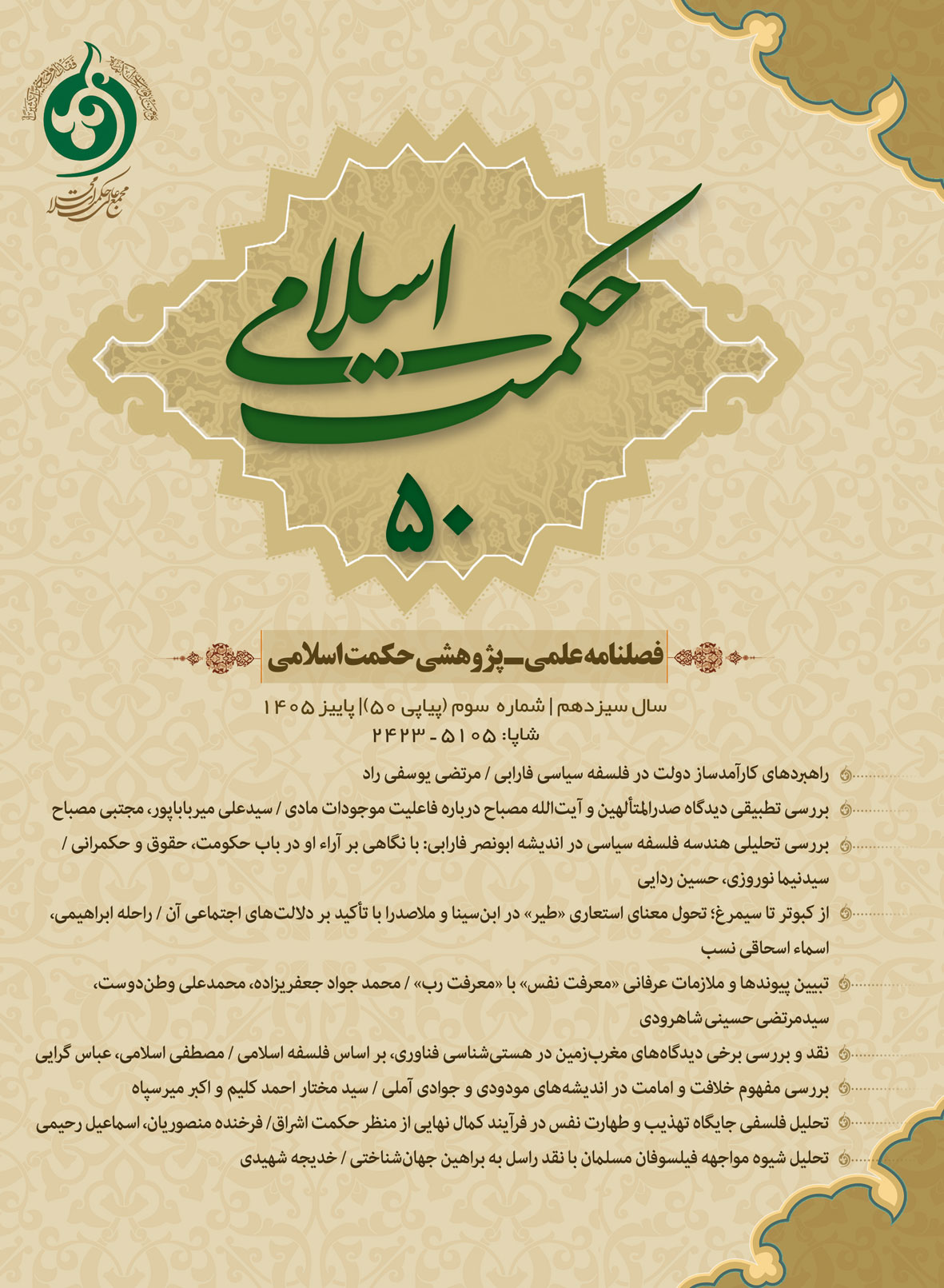
از کبوتر تا سیمرغ؛ تحول معنای استعاری «طیر» در ابن‌سینا و ملاصدرا با تأکید بر دلالت‌های اجتماعی آن

نوع مقاله : مقاله پژوهشی

نویسندگان
1 دانشجوی دکترای فلسفه و حکمت، دانشکده علوم انسانی، دانشگاه الزهر
2 دانشجو دکترای فلسفه و کلام،دانشکده علوم انسانی،دانشگاه تربیت دبیر شهید رجایی
چکیده
این پژوهش با رویکردی بینا رشته‌ای و بر پایه‌ نظریه‌ استعاره‌های مفهومی لیکاف و جانسون، سیر تحول استعاره‌های طیرنامه در آثار ابن‌سینا و ملاصدرا و دلالت‌های اجتماعی آنها را واکاوی می‌کند. نخست، قصیده‌ عینیۀ ابن‌سینا بررسی می‌شود که رابطه‌ نفس و قوا را با استعاره‌ «پرنده‌ اسیر» ترسیم می‌کند؛ وضعیتی قابل تطبیق با وضع طبیعی هابز. در رسالة‌الطیر، ابن‌سینا تلاش نفس برای ایجاد وفاق میان قوا را با استعاره‌ «پرنده‌ ندا دهنده» نشان می‌دهد؛ الگویی همخوان با کنش تفاهمی هابرماس. ملاصدرا با اصلاح طرح‌واره‌های پیشین، استعاره‌ «پرنده‌ گشوده‌بال» را مطرح می‌کند که قوای نظری و عملی را به ‌مثابه دو بال متعادلِ نفس معرفی می‌کند؛ تصویری منطبق با نظریه‌ سازمان‌های یادگیرندۀ سنگه. در نهایت، استعاره‌ی «سیمرغ» در اندیشه‌ صدرایی که نمودار ِخودِ متعالی، وحدت در عین کثرت قوا می‏باشد؛ الگویی که همخوان با مفهوم «انسان کامل» و فوق تجرد بودن نفس و همچنین خودِ متحول در رابرت کیگان می‏باشد. یافته‌ها نشان می‌دهد این استعاره‌ها صرفاً تمثیل‌های فلسفی نیستند، بلکه قابلیت کاربست به‌عنوان مدل‌هایی در ساختارهای اجتماعی و سازمانی و زندگی روزمره و تجربه‏های زیسته و ارتباطات فردی و جمعی را دارند.
کلیدواژه‌ها
موضوعات

عنوان مقاله English

From the Dove to the Simurgh: The Transformation of the Metaphorical Meaning of “Bird” in the Writings of Ibn Sīnā and Mullā Ṣadrā, with an Emphasis on Its Social Implications

نویسندگان English

raheleh ebrahimi 1
asmaa esaghinasab 2
1 PhD Candidate in Philosophy and Wisdom, Faculty of Humanities, Alzahra University.
2 PhD Candidate in Philosophy and Theology, Faculty of Humanities, Shahid Rajaee Teacher Training University.
چکیده English

Drawing on an interdisciplinary approach and based on the conceptual metaphor theory of Lakoff and Johnson, this study examines the development of metaphors in the Bird Epistles (Ṭayr-nāmeh) of Ibn Sīnā and Mullā Ṣadrā and explores their social implications. First, Ibn Sīnā’s Qaṣīda al-ʿAyniyya is examined, in which the relationship between the soul and its faculties is represented through the metaphor of the “captive bird,” a condition that can be compared to Hobbes’s state of nature. In Risālat al-Ṭayr, Ibn Sīnā depicts the soul’s struggle to establish harmony among its faculties through the metaphor of the “calling bird,” a model that is consistent with Habermas’s concept of communicative action. Mullā Ṣadrā, by revising these earlier conceptual schemas, introduces the metaphor of the “open-winged bird,” representing the theoretical and practical faculties as the two balanced wings of the soul. This image corresponds to Senge’s theory of learning organizations. Finally, the “Simurgh” in Ṣadrian thought represents the transcendent self and the unity of the faculties in multiplicity. This model is compatible with the concept of the "Perfect Human", the soul’s state of being beyond immateriality, and Robert Kegan’s concept of the transforming self. The findings indicate that these metaphors are not merely philosophical analogies; rather, they have the potential to function as models applicable to social and organizational structures, everyday life, lived experience, and individual and collective communication.

کلیدواژه‌ها English

: Conceptual Metaphors
Soul and its Faculties
Bird
Ibn Sīnā
Mullā Ṣadrā

  • تاریخ دریافت 08 خرداد 1404
  • تاریخ بازنگری 06 مرداد 1404
  • تاریخ پذیرش 04 شهریور 1405